A series for Lent from the Memorial Church (Unitarian), Cambridge, England. We posted these each day in 2023, starting here, but the introduction has links to each day. Perhaps something inspiring for the next 40 days.
“Dávid Ferenc” (@unitariandavidferenc) posted this last year on Facebook:
On this date, January 6, in 1568 king John Sigismund assembled a Diet to be held in the town Torda (today Turda in Romania). At this Diet our Bishop Dávid Ferenc (Francis David) inspired the delegates to later approve the first toleration edict of freedom of faith among the Christian religions.
This was a new and revolutionary idea of freedom of religion at that time, and therefore January 6 1568 also is considered by tradition to be the birth of The Unitarian Church.
Persons identified in the famous painting by Aladár Körösfői-Kriesch showing Bishop Francis David at the Diet of Torda 1568.
To begin by always thinking of love as an action rather than a feeling is one way in which anyone using the word in this manner automatically assumes accountability and responsibility. We are often taught we have no control over our “feelings.” Yet most of us accept that we choose our actions, that intention and will inform what we do. We also accept that our actions have consequences. … If we were constantly remembering that love is as love does, we would not use the word in a manner that devalues and degrades its meaning.
— bell hooks, All About Love (2000)
Email westforkuu@gmail.com or use our contact form for more information or write to us at PO Box 523, Clarksburg WV 26302
I have a very simple creed: that life and joy and beauty are better than dusty death, and I think when we listen to such music as we heard today we must all of us feel that the capacity to produce such music, and the capacity to hear such music, is a thing worth preserving and should not be thrown away in foolish squabbles. You may say it’s a simple creed, but I think everything important is very simple indeed. I’ve found that creed sufficient, and I should think that a great many of you would also find it sufficient, or else you would hardly be here.
— Bertrand Russell, Ninetieth birthday celebration speech (18 May 1962), as cited in his Autobiography of Bertrand Russell: 1944-1969 (1969)
Email westforkuu@gmail.com or use our contact form for more information or write to us at PO Box 523, Clarksburg WV 26302
Peace is the mind’s old wilderness cut down – A wider nation than the founders dreamed. Peace is the main street in a country town; Our children named; our parents’ lives redeemed.
Not scholar’s calm, nor gift of church or state, Nor everlasting date of death’s release; But careless noon, the houses lighted late, Harvest and holiday: the people’s peace.
The peace not past our understanding falls Like light upon the soft white tablecloth At winter supper warm between four walls, A thing too simple to be tried as truth.
Days into years, the doorways worn at sill, Years into lives, the plans for long increase Come true at last for those of God’s good will: These are the things we mean by saying, Peace.
— John Holmes, “The People’s Peace”, Hymns for the Celebration of Life.
Email westforkuu@gmail.com or use our contact form for more information or write to us at PO Box 523, Clarksburg WV 26302
In a time of drastic change one can be too preoccupied with what is ending or too obsessed with what seems to be beginning. In either case one loses touch with the present and with its obscure but dynamic possibilities. What really matters is openness, readiness, attention, courage to face risk. You do not need to know precisely what is happening, or exactly where it is all going. What you need is to recognize the possibilities and challenges offered by the present moment, and to embrace them with courage, faith, and hope. In such an event, courage is the authentic form taken by love.
— Thomas Merton, Conjectures of a Guilty Bystander (1966)
Email westforkuu@gmail.com or use our contact form for more information or write to us at PO Box 523, Clarksburg WV 26302
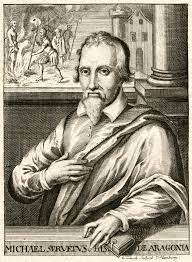
On this date, 27 October 1553, Michael Servetus, physician and theologian, was burned at the stake in Geneva, Switzerland, for the crime of rejecting the doctrine of the Trinity. He was the first European to describe pulmonary circulation. The description, unnoticed by any of the heretic hunters who examined Servetus’ works, was hidden in the book that Calvin ordered to be burned along with Servetus himself.
A useful summary of Servetus’ life, works, and death, as well as a list of his works, can be found at the Michael Servetus Institute web site. Fuller descriptions of Servetus’ life, works, trial, and execution can be found in Lawrence and Nancy Goldstone, Out of the Flames: The Remarkable Story of a Fearless Scholar, a Fatal Heresy, and One of the Rarest Books in the World, or Roland H. Bainton, Hunted Heretic: The Life and Death of Michael Servetus, 1511-1553.
… celebrations in most countries outside of India and South Africa have been, at best, muted.
Perhaps that is because the Non-Violence promoted by the commemoration is not just a sort of vague warm fuzzy pacifism, but an active strategy for social change.
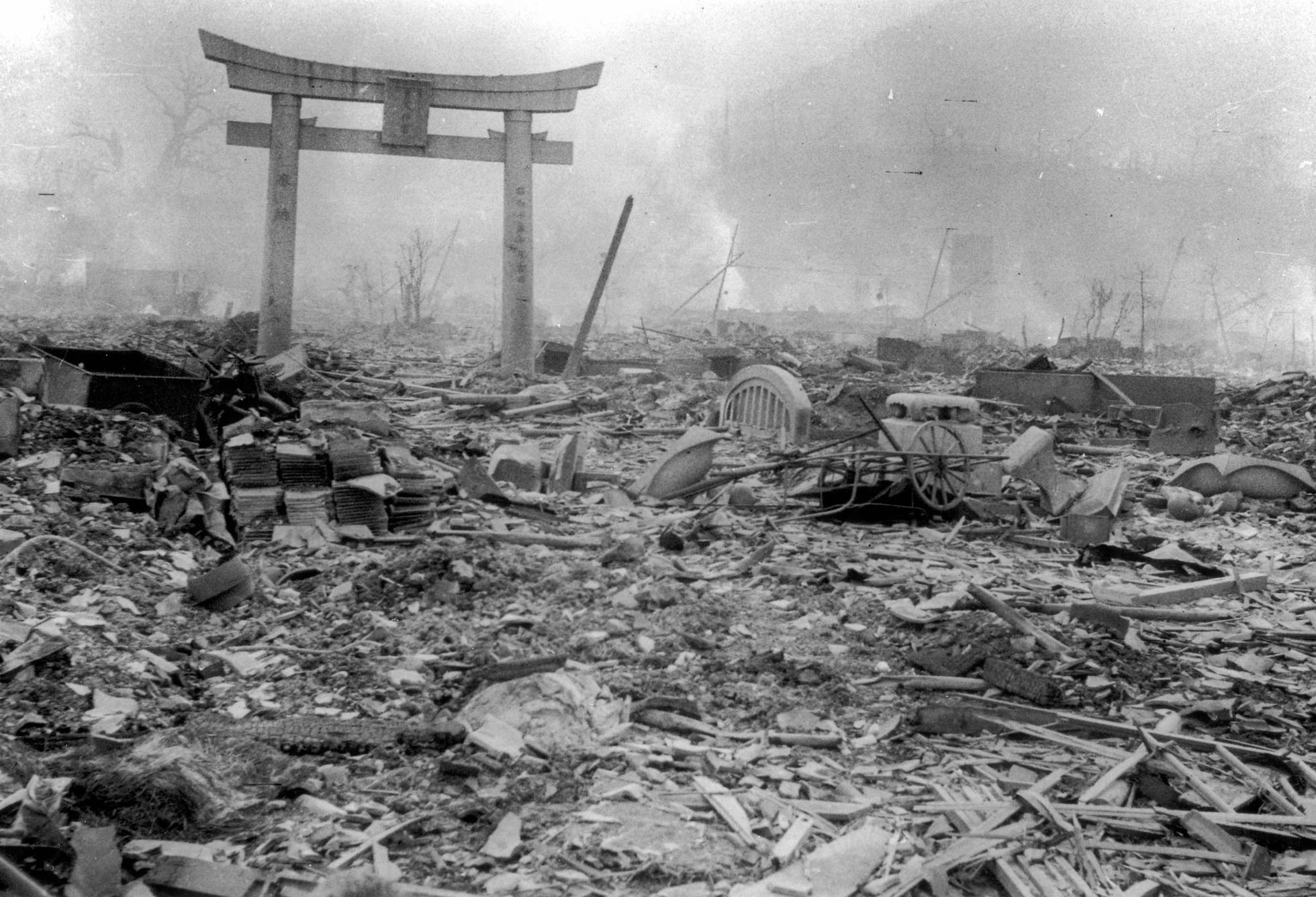
After the bombing of Hiroshima and the Russian declaration of war, Japanese leaders decided to sue for peace. Advocates of surrender needed only enough time to work out acceptable terms and to reconcile military officers to the inevitable. As the Japanese discussed policy, the Americans followed standard military procedure. Control shifted from the commander in Washington, President Truman, to the commander of the bomber squadron on the island of Tinian in the Pacific. Plans called for Fat Man, a plutonium bomb, to be ready by August 11. Since work went faster than expected, the bomb crew advanced the date to the ninth. The forecast called for clear skies on the ninth, followed by five days of bad weather. Urged on by the squadron commander, the crew had Fat Man armed and loaded on the morning of the ninth. And again following military SOP, the pilot shifted his attack to Nagasaki when clouds obscured his primary target.
Had the original plan been followed, Japan might well have surrendered before the weather cleared. Nagasaki would have been spared. But the officer who ordered the attack had little appreciation of the larger military picture that made Nagasaki a target or that made the Soviet Union a diplomatic problem connected with the atom bomb. He weighed factors important to a bomb squadron commander, not to diplomats or political leaders. The bombing of Nagasaki slipped from the hands of policy makers not because of some rogue computer or any power-mad, maniacal general, but simply because of military SOPs.
— James West Davidson & Mark Hamilton Lytle, After the Fact: The Art of Historical Detection, fourth edition (2000)
On August 9, 1945, the bomb named “Fat Man” was dropped on Nagasaki by a USAAF B-29 airplane named “Bockscar”, piloted by U.S. Army Air Force Major Charles Sweeney. Source.
On 6 August 1945, at approximately 8:15 a.m. Hiroshima time (approximately 7:15 p.m. on 5 August Washington D.C. time) crew of a US Army Air Force B-29 bomber christened Enola Gay dropped the first atomic bomb to be used as a weapon of war.









 West Fork Unitarian Universalists