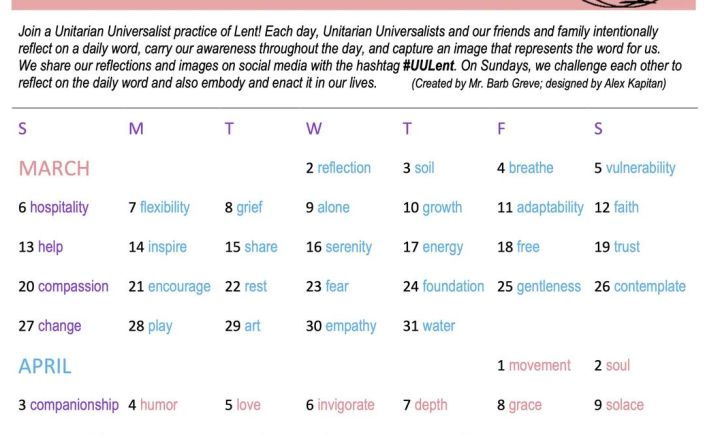
“In Judaism, showing hospitality (hakhnasat orchim) to guests is considered a mitzvah. When one knows of strangers who are hungry or need a place to relax, it becomes a legal obligation. Some rabbis consider hakhnasat orchim (literally the “bringing in of strangers”) to be a part of gemilut hasadim (giving of loving kindness).” – From The Jewish Virtual Library
“I do not wish to breathe another breath if it is not shared with others. The breath of life is not mine alone.
I brought myself to be with you, hoping that by inhaling the compassion, the courage, the hope found here, I can exhale the fear, the selfishness, the separateness I keep so close to my skin.
I cannot live another moment, at least not one of joy, unless you and I find our oneness somewhere among each other, somewhere between the noise, somewhere within the silence of the next breath.” – “The Breath of Life is not Mine Alone” by Rev. Dr. Kristin L. Harper
“It’s that elm shade, red rust clay you grew up on That plowed up ground that your dad damned his luck on That post game party field you circle up on And when it rains, you get stuck on Drift a cloud back behind county roads that you run up And mud on her jeans that she peeled off and hung up Her blue-eyed summertime smile looks so good that it hurts Makes you wanna build a ten percent down White picket fence house on this dirt”
“Fireflies” by Owl City offers a reflection of thoughts on a busy life and learning to be a part of something bigger.
“A heartwarming family film sharing themes of love, acceptance, and having a positive self-image.” Sometimes we need to be reminded that good reflections are possible and how we view ourselves can change our spirit.
#UULent is designed to be used individually, as a family, or as a congregation. For each day in Lent a word has been selected. Each day participants are invited to reflect on the meaning of the day’s word, then create a photograph that represents the word, idea, practice, or concept and post it here and/or elsewhere.
Beginning on Ash Wednesday and for each day until Easter, the word for the day and a related quote will be posted. Reflect and engage throughout the day, checking for the word and quote in the morning, then come back later in the day to add your photo* and to see the images and words others have shared throughout the day (*YOUR photo – please respect copyright!).
May this intentional practice and discipline impact your daily life in ways that bring you closer to your spiritual core and offer you resiliency for life.
Here at West Fork Unitarian Universalists we will strive to post a reflection each day on the word of the day. We look forward to journeying through this season of contemplation with you.
Special thanks to Mr. Barb Greve, Karen Bellevance-Grace, and Alex Kapitan for their work on #UULent
On Saturday, May 30th filmmaker and photographer David Jones of David Jones Media felt compelled to go out and serve the community in some way. He decided to use his art to try and explain the events that were currently impacting our lives. On day two, Sunday the 31st, he activated his dear friend author Kimberly Jones to tag along and conduct interviews. During a moment of downtime he captured these powerful words from her and felt the world couldn’t wait for the full-length documentary, they needed to hear them now.
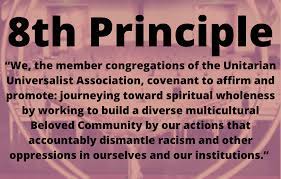
8th Principle: “We the member congregations of the Unitarian Universalist Association, covenant to affirm and promote: journeying toward spiritual wholeness by working to build a diverse multicultural Beloved Community by our actions that accountability dismantle racism and other oppressions in ourselves and our institutions.”
“In progressive religious circles, you will often hear calls to “build the Beloved Community,” but I’m not sure we always appreciate the full historic resonance of that phrase. The term “Beloved Community” was coined by the early twentieth-century American philosopher Josiah Royce (1855-1916). But most of us learned it not from Royce but from The Rev. Dr. Martin Luther King, Jr., who often spoke of the “Beloved Community” as his ultimate goal.” In his essay, “What Do We Mean We When Say, “Building the Beloved Community”?” Rev. Carl Gregg expounds upon this idea.






 West Fork Unitarian Universalists