For the Beginning of the New Year
UU thoughts, sermons, music
2016 hasn’t been perfect, but we have had a good year.
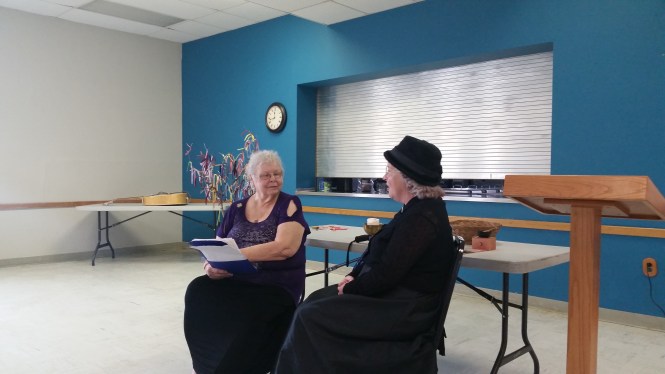
We have celebrated historical figures from UU history. We even had special guest Carol Sroczynski who interviewed Mother Jones, played by Patience Deweese. Special thanks to them and the members (Shelia and Jim Rye) of the Morgantown West Virginia Unitarian Universalist Fellowship who provided our music for that day. 

”There is no way to understand and appreciate the meaning and message of Kwanzaa without understanding and appreciating its profound and pervasive concern with values. In fact. Kwanzaa’s reason for existence, its length of seven days, its core focus and its foundation are all rooted in its concern with values. Kwanzaa inherits this value concern and focus from Kawaida, the African philosophical framework in which it was created. Kawaida philosophy is a communitarian African philosophy which is an ongoing synthesis of the best of African thought and practice in constant exchange with the world.”
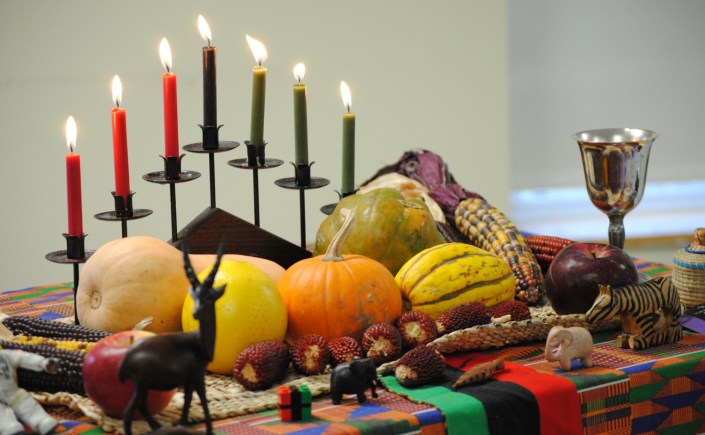
There are seven days and seven principles of Kwanzaa.
Here is a devotional for Kwanzaa.
A Prayer For Kwanzaa
Prayer
O come all you faithful, rejoicing and victorious,
Come, let us embrace the mystery in the spirit of life, as we celebrate the goodness of Kwanzaa and the the African American
heritage.
Come and give thanks for companions on the journey in the struggle for freedom and justice.
Our roots in the soil and soul of Mother Africa reach far and wide.
Creator of all, lead us to be true to our nature with respect and dignity for life, from conception to its natural end at death.
Bless and keep us in solidarity one to another.
Ache.
Have a Blessed Day,
Cricket
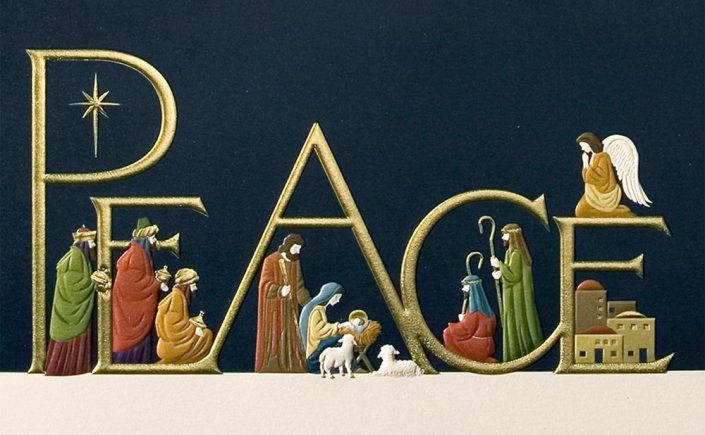
Today is Christmas. It is the celebration of the birth of Jesus Christ. You can read the full story here.
It is a day of celebration. It is also a day to remember how lucky we are and how we need to help others in the world. Christmas is a reminder for us to be a light in the world.
I have included a devotion for today.
Namaste,
Cricket
Now the Work of Christmas Begins
Affirmation
When the song of the angels is stilled,
when the star in the sky is gone,
when the kings and princes are home,
when the shepherds are back with their flocks,
the work of Christmas begins:
to find the lost,
to heal the broken,
to feed the hungry,
to release the prisoner,
to rebuild the nations,
to bring peace among the people,
to make music in the heart.
Please note that this piece may not be used in any performance or distribution that involves compensation.
Source: “The Mood of Christmas and Other Celebrations”
Author, philosopher, theologian, educator, and civil rights leader.
“And now is a good time to live up to that promise, to light a candle in the darkness.”
https://www.washingtonpost.com/local/the-hanukkah-christmas-convergence-couldnt-be-more-symbolic-of-the-light-we-must-embrace/2016/12/22/00e05a58-c866-11e6-85b5-76616a33048d_story.html?utm_term=.96b585179472
I really enjoyed this article and hope you do too. Let the light within us all shine brightly.
Namaste,
Cricket
Today is the Winter Solstice! Hope you have a beautiful day!
If you are looking for ways to celebrate here are some ways for you to do that. I also found some ideas to do with children here.
Here is a devotional for today:
Winter Solstice Meditation By Christine C Robinson
We join our hearts and minds together in a time of meditation or prayer; spoken, silent, sung, and shared. It is a precious time, and all precious times want preparation, so I invite you to settle yourself in a straight posture, both feet grounded on the floor, to take a deep breath, hold it until you notice your need to breathe out, and relax. I invite you to close your eyes, for vision is the single most energy intensive activity of our brains.
These next few days are the days of the Winter Solstice, a time when those who are very attentive to the skies note that the sun, which has relentlessly moved southward on the horizon since last June, seems to pause on its journey before beginning to climb northwards to center again. Solstice is a time of pause. So…pause. Breathe. Relax. Rest. Be at peace.
Spirit of winter rest, help us to enjoy your peace in this quiet place.
Remind us to pause during this season.
Grant us awareness, keep our gratitude fresh each day.
May the songs in our heart be blessings and insights to us and to others
and may compassion always shine forth from the depths of our hearts.
I hope you have a blessed solstice.
Namaste,
Cricket
Over 500 years ago, European governments adopted something called the Doctrine of Discovery: any lands and resources not already ruled by a European Christian monarch automatically became the property of whatever government whose subjects traveled to and occupied the territory. This Doctrine of Discovery is what legitimized the colonization of the Americas and later other lands, and the genocide and enslavement of millions of indigenous peoples. It was also this doctrine that gave various Christian denominations justification for establishing missions all over colonial territories and forcibly converting millions of indigenous peoples to Christianity.
I tell you this history because I want you to understand how profound it was for me to be among the 500 clergy who gathered with elders from many tribes at Standing Rock (in early November 2016) to publicly beg forgiveness for our traditions’ roles in the decimation of Native peoples and their cultures. And I want you to smell the smoke I smelled from the sacred fire the Standing Rock Sioux have kept burning since they established the Oceti Sakowin camp to try and prevent the Dakota Access Pipeline from being routed through their sacred lands, from being laid at all given the horrible risk such a pipeline would pose to the water supply of tens of millions of people down river. I want you feel the catch I felt in my throat as UUA President Rev. Peter Morales participated in burning a copy of the Doctrine of Discovery.
I want you feel the dizzy disbelief I felt at the generosity of these peoples whose entire trajectories my culture has all but annihilated, and my amazement as their grandmothers smudged and blessed me when the purpose of my trip had been to try to support them. I want you feel the rage that burned in the bottom of my stomach as I saw the heaps of personal belongings and sacred objects the police had trashed after they arrested, stripped, numbered on the arm with permanent marker, and left overnight in unheated cells the size of dog kennels several peaceful water protectors. And I want you to feel that rage quadruple as I did when I learned that the pipeline had originally been routed to go through Bismarck, but that it had been rerouted when that city’s mainly white citizenry objected, worried about a leak jeopardizing their water supply, the rage of learning that the governor of North Dakota and his closest friends stand to personally profit from the completed pipeline.
I want you to feel the tension I felt as I walked from camp to the “front line,” where a militarized police force had positioned burned out vehicles and officers in SWAT gear to keep water protectors from even being able to see the destruction the oil company’s construction workers were waging as they dug through sacred lands that include burial and battlegrounds as hallowed to the Lakota and Dakota peoples as Gettysburg or the Alamo are to many of us. I want you feel the sense of unease I felt, the sense of being under a microscope, as a police helicopter and later a small prop plane circled just overhead of us as we clergy confessed and prayed, sang and listened to the stories and urgings of tribal elders.
I want you to feel the great sadness that slowly settled into me, more every hour I was in that place so saturated with over a century of loss and theft and violence, the sadness of knowing that my lifestyle is contributing to the hunger for oil. The sadness I felt as I learned that the police were using that same helicopter and plane along with sound cannons and huge prison yard lights to deprive the water protectors from sleep at night. The sadness that while I got to get back on a plane and fly home to my healthy family and the new home and job that I love, many of these peaceful and strong and admirable people would remain at the camp through the winter, or go back to lives in which simply going grocery shopping can be impossible because racist cashiers routinely refuse to serve Native Americans.
There is so much more of what I saw that I want to share with all of you, but I want to end with what I think is the most important part of my experience at Standing Rock: the sense of the sacred every time I met a water protector. Their grounding in prayer, their profound spiritual maturity left me greatly humbled. Never once did I hear any of them, whether in personal conversation or from a microphone speak with hatred towards the police who have been injuring them, or towards the Americans whose greed for wealth and hunger for oil have forever crippled the natural resources of the continent that they honored for millennia before colonization. Instead, they spoke of their growing concern of this pipeline and a prophecy that foretells great destruction if a “black snake” is allowed to travel from the top to the bottom of north America. And they spoke always of a need for all of us to heal, all of us to repent, all of us to change our ways and live in alignment with the goodness and bounty and beauty of the earth we share.
A water protector I met there named Shoshi reminded me of something I’d forgotten: the word apocalypse literally means “the lifting of the veil” or the time when people begin to see what’s always been in front of them. We know that relying on oil to power our lives is bad for the earth and, as such, bad for us. Our culture has just been working really hard for a really long time to ignore that truth.
May my tiny contribution to supporting indigenous self-determination and supporting the water protectors at Standing Rock, may the contributions of each of us in our own ways, help tip our world into a new age. May the contributions of each of us help tip our world into a new moral revival, where people are valued more than profits, where the health of our planet is valued more than lifestyle convenience, and where love of human diversity is valued more than fear.

To wish for compassion
To pray for courage
To experience doubt
To bear sorrow
To strive for sureness—
All these are qualities
For which each of us
Should be grateful.
But to feel a genuine fellowship
For the whole human family,
To act
So that our empathy
Is evident
Wherever we go—
That’s the object.
That’s the life-long goal.
(written for the Presidential Election, 2016)
I walk in, as on pilgrimage.
The altar cloths are red, white, and blue
the ushers are the women
who have been running these things
who have been running everything
since before I was born.
I’m handed the ballot
like a scroll
because the questions
seem that important—
ancient and modern
of what my God and country
ask of me:
who?
Who—for commissioner, mayor, president—
who—for district 8, ward 7, school board—
who—will do justice, love mercy, and walk humbly?
I make my mark
with at least a shred of hope
that something good will come from this.
And regardless, I remember:
the world won’t be destroyed, entirely, by this;
the world won’t be saved, entirely, by this.
Marking my vote
is like kneeling in prayer
because neither will accomplish
anything right away—
but the purpose of both
is to remind me
of my deepest hope
for the world that I’m trying to help create.
So I rise from prayer,
and turn in my ballot
and remember the who is me,
and us, and we the people—
and again I set to the task that is mine:
justice, mercy, humble service
in my small corner of the world.
In his avant-garde theatrical “The Last Supper At Uncle Tom’s Cabin,” New York choreographer/dancer Bill T. Jones includes a backwards broadcast of Martin Luther King’s “I Have A Dream” speech: Last At Free Are We. Almighty God Thank! The jumbled juxtaposition of the great orator’s words is jarring, but as a black, gay artist, Jones means no disrespect. The entire work is intended to take the audience out of their normal comfort zone, to help them confront the realities of racism and homophobia that still haunt our land 60 years after Dr. King’s famous speech.
I had an unusual chance to appear on stage with Jones back in 1991, when the show first debuted. In each city where “The Last Supper” performed, a local minister was invited to be part of the act, to join in an impromptu, unscripted dialogue about the persistence of evil and the power of faith. “Are you a person of faith?” Bill asked me. It was a simple question, but unexpected. The two of us were seated in straight-backed chairs on the proscenium, with spotlights shining down and three thousand people filling the theater, listening for my answer. It was a tense moment.
I finally responded that all of us are people of faith. Everyone believes in something. Everyone trusts in a power greater than themselves. The question is where you put your faith. Dr. King, for example, put his faith in the power of non-violent action and redemptive love. Others put their trust in the big stick, armaments and retaliation. But the philosophy of an eye-for-an-eye, King said, left everyone blind.
That particular night happened to be the civil rights leader’s birthday, and January 15 also marked the start of the first Gulf War. American warplanes were bombing Baghdad even as we spoke.
Many wars later (Bosnia, Iraq, and Afghanistan), Martin Luther King Jr.’s birthday might be a good time for all of to ask where we put our faith. In F-35 bombers and drone technology? Or do we need a change of heart? “Hatred cannot vanquish hatred,” King proclaimed, “only love can do that.” But do any of us really believe that, even a little?
Dream A Have You? In Believe You Do What? Are “realpolitick” and bigger budgets for defense actually the path to peace? The best way to celebrate King’s legacy is to risk getting out of your comfort zone. Let yourself be confronted by the tough questions that he asked.