Lent 2018 – Day 6 – Prayer

What is prayer? According to Wikipedia, “Prayer is an invocation or act that seeks to activate a rapport with an object of worship through deliberate communication. Prayer can be a form of religious practice, may be either individual or communal and take place in public or in private.” Prayer is seen as definitively religious. Prayer can be healing. Prayer can be a destination for our thoughts. There are as many ways to prayers as there are people who pray.

Beliefnet collected The Essential Prayers of World Religions. They are the Refuge Prayer from Buddhism, the Lord’s Prayer from Christianity, the Faitha from Islam, the Gayatri Mantra from Hinduism, and the Shema from Judaism.

Some people sing. Some people use prayer beads. Some color mandalas. Some pray out loud. Some pray silently.

“The Atheist Prays” by Barbara J. Pescan wrestles with the questions about praying when you are unsure if anyone is listening.
I am going to leave you with a song from Kesha’s new album.


Peace and Prayers,

Cricket

Lent 2018 – Day 5 – Mercy

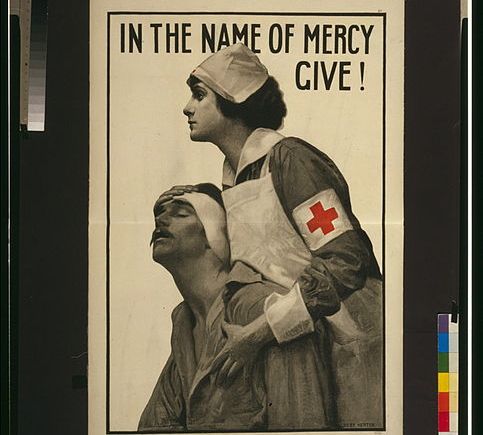
Mercy is defined in the dictionary as “compassion or forgiveness shown toward someone whom it is within one’s power to punish or harm.

What does Mercy mean to you? Is mercy something we do? Is mercy just for the Divine?

Here is some beautiful music to listen to while thinking about mercy.

https://youtu.be/1DfMZhK0TAY

Seeking Mercy, Seeking a Home by Erika Hewitt

May we learn mercy. May we breathe it in ourselves and breathe it out for others.

Namaste,

Cricket

Lent 2018 – Day 4 – Pain

Pain is hard to sit with. We always want to make it go away. What happens when we focus on the pain instead of focusing on what we will do when the pain is gone?

According to this article’ “Biblical Laments: Prayer out of Pain” lamentations are necessary for spiritual growth. What are lamentations? Here is their definition: ”

Lamentation, a prayer for help coming out of pain, is very common in the Bible. Over one third (50 or so) of the psalms are laments. Lament frequently occurs in the Book of Job: “Why did I not perish at birth, come forth from the womb and expire?” (Job 3:11). The prophets likewise cry out to God, such as Jeremiah does: “Why is my pain continuous, my wound incurable…?” (15:18) and Habakkuk: “…my legs tremble beneath me. I await the day of distress that will come upon the people who attack us” (3:16).

One whole book, Lamentations, expresses the confusion and suffering felt after the destruction of Jerusalem by the Babylonians.”

I believe the words of pain are important because they keep us grounded and allow us to feel.

In the Hebrew Bible the book of Lamentations is full of pain. Here are some words from chapter 3:

” 1 I am the man who has seen affliction
by the rod of the Lord’s wrath.
2 He has driven me away and made me walk
in darkness rather than light;
3 indeed, he has turned his hand against me
again and again, all day long.

4 He has made my skin and my flesh grow old
and has broken my bones.
5 He has besieged me and surrounded me
with bitterness and hardship.
6 He has made me dwell in darkness
like those long dead.

7 He has walled me in so I cannot escape;
he has weighed me down with chains.
8 Even when I call out or cry for help,
he shuts out my prayer.

And yet, several verses later in the same chapter it is said,

“28 Let him sit alone in silence,
for the Lord has laid it on him.
29 Let him bury his face in the dust—
there may yet be hope.
30 Let him offer his cheek to one who would strike him,
and let him be filled with disgrace.

31 For no one is cast off
by the Lord forever.
32 Though he brings grief, he will show compassion,
so great is his unfailing love.
33 For he does not willingly bring affliction
or grief to anyone.

Pain leads to prayer. Pain leads to finding a problem. Sitting with our pain can helps us find out where it comes from.

I will leave you with a quote from Brené Brown,

“I went back to church thinking that it would be like an epidural, like it would take the pain away… that church would make the pain go away. Faith and church was not an epidural for me at all; it was like a midwife who just stood next to me saying, ‘Push. It’s supposed to hurt a little bit.'”

Namaste,

Cricket

Lent 2018 – Day 3 – Recovery

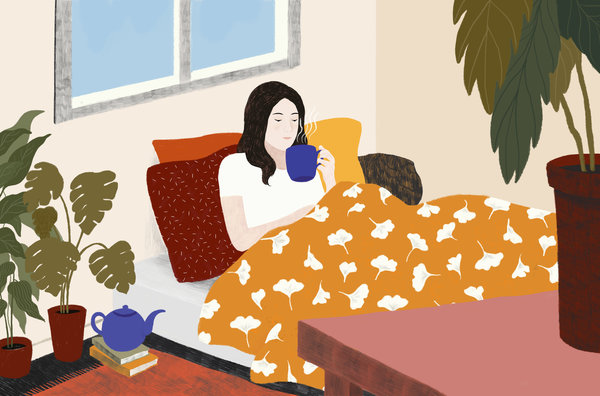
Recovery can mean a lot of things to a lot of people, but at the heart of it all recovery is about healing and returning to a state of “normalcy”. We often try to rush recovery. We don’t often celebrate it for what it is. We don’t always give it the chance to transform us.

This opinion piece from The New York Times by Firoozeh Dumas is about how recovering from surgery in Germany is different from recovery in the United States.

Sometimes recover can be hard and uncomfortable but we need that pain to help us see what’s wrong and to correct or move past it.

Today’s Prayer

May we hold space for recovery in our lives and the lives of others. May we understand that it is not an overnight process. May we sit with discomfort. May we accept the transformation recovery has to offer.

Namaste,

Cricket

Picture Credit: Rosalie Stroesser in the New York Times

Meditation on Worship

Today for lent we are to contemplate worship. What does worship mean to you? How do you worship? 

Namaste,
Cricket

#UULent

Here is an article on Worship Theory in UU.
If you Google the word Worship, this is definition that will pop up it is both a noun and a verb. 

noun

  1. 1.

    the feeling or expression of reverence and adoration for a deity.

    “the worship of God”

    synonyms: reverencevenerationadorationglorificationgloryexaltation; More

    verb

    1. 1.

      show reverence and adoration for (a deity); honor with religious rites.

      “the Maya built jungle pyramids to worship their gods”

      synonyms: reverereverenceveneratepay homage to, honoradorepraise

    Meditation on Doubt 

    Robert T. Weston wrote this responsive reading about doubts. 
    In this song from A Chorus Line Lea Salonga explores doubting yourself and being trained to doubt yourself. 

    We all have doubts. Sometimes we have to sit with that doubt. 

    Namaste,
    Cricket 

    #UULent

    Meditation on Art

    What does art meant to you? In this interactive article on art from Khan academy; read the comments, watch the video, and take the survey. It’s a fun exercise.

    To answer the question What is Art? Here is Victor Hugo Zayas.

    I hope that today you can take a few moments to create some art or enjoy some art.

    Namaste,
    Cricket

    #UULent