SOP: Standard Operating Procedures

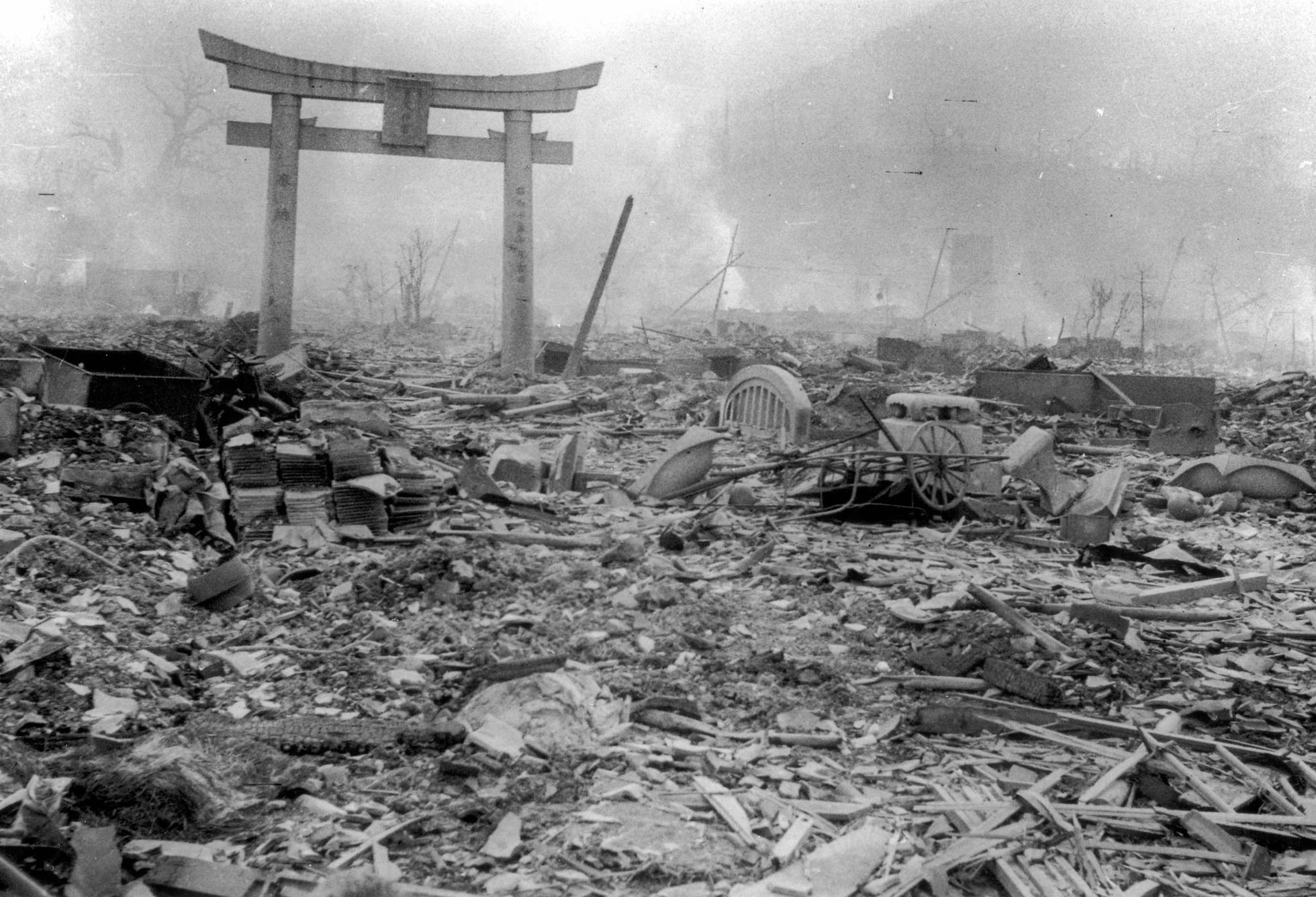
After the bombing of Hiroshima and the Russian declaration of war, Japanese leaders decided to sue for peace. Advocates of surrender needed only enough time to work out acceptable terms and to reconcile military officers to the inevitable. As the Japanese discussed policy, the Americans followed standard military procedure. Control shifted from the commander in Washington, President Truman, to the commander of the bomber squadron on the island of Tinian in the Pacific. Plans called for Fat Man, a plutonium bomb, to be ready by August 11. Since work went faster than expected, the bomb crew advanced the date to the ninth. The forecast called for clear skies on the ninth, followed by five days of bad weather. Urged on by the squadron commander, the crew had Fat Man armed and loaded on the morning of the ninth. And again following military SOP, the pilot shifted his attack to Nagasaki when clouds obscured his primary target.

Had the original plan been followed, Japan might well have surrendered before the weather cleared. Nagasaki would have been spared. But the officer who ordered the attack had little appreciation of the larger military picture that made Nagasaki a target or that made the Soviet Union a diplomatic problem connected with the atom bomb. He weighed factors important to a bomb squadron commander, not to diplomats or political leaders. The bombing of Nagasaki slipped from the hands of policy makers not because of some rogue computer or any power-mad, maniacal general, but simply because of military SOPs.

— James West Davidson & Mark Hamilton Lytle, After the Fact: The Art of Historical Detection, fourth edition (2000)

On August 9, 1945, the bomb named “Fat Man” was dropped on Nagasaki by a USAAF B-29 airplane named “Bockscar”, piloted by U.S. Army Air Force Major Charles Sweeney. Source.

There Will Come Soft Rains

Ray Bradbury’s short story “There Will Come Soft Rains — August 4, 2026” from The Martian Chronicles reflects the day before the 80th anniversary of the bombing of Hiroshima in 1945. This version from BBC Radiophonic Workshop, 1977, titled “August 2026: There Will Come Soft Rains”, was adapted for “Narrator, Vocoder and Synthesizer” by Malcolm Clarke.

Someone’s comment on the YouTube page for a different version provides some context:

This Ray Bradbury story is an anti-war message, as is the Sara Teasdale poem with the same title. However, the full title of the story in The Martian Chronicles is “There Will Come Soft Rains — August 4, 2026”. On August 5, 1945 (US time), the USA dropped a nuclear bomb on Hiroshima. August 4, 2026 marks the end of a full 80 years after the bombing. The destroyed house repeating “Today is August 5, 2026” endlessly is a warning of what happened when we forgot Hiroshima 81 years before. Bradbury wrote the story in 1950, just after the Soviet Union first successfully tested a nuclear bomb in 1949. The story was right for its time as it is today. It is about what a Cold War brings when it gets hot.

Sara Teasdale wrote her poem around 1918 during a time of total war and pandemic. Perhaps the poem still has something to say to us in our current condition.

(War Time)

There will come soft rains and the smell of the ground,
And swallows calling with their shimmering sound;

And frogs in the pools singing at night,
And wild plum-trees in tremulous white;

Robins will wear their feathery fire
Whistling their whims on a low fence-wire;

And not one will know of the war, not one
Will care at last when it is done.

Not one would mind, neither bird nor tree
If mankind perished utterly;

And Spring herself, when she woke at dawn,
Would scarcely know that we were gone.

—- Sara Teasdale, There Will Come Soft Rains

In Memory of Dag Hammarskjöld

You wake from dreams of doom and — for a moment — you know: beyond all the noise and the gestures, the only real thing, love’s calm unwavering flame in the half-light of an early dawn.

— Dag Hammarskjöld, Markings, translated by Leif Sjöberg & W.H. Auden

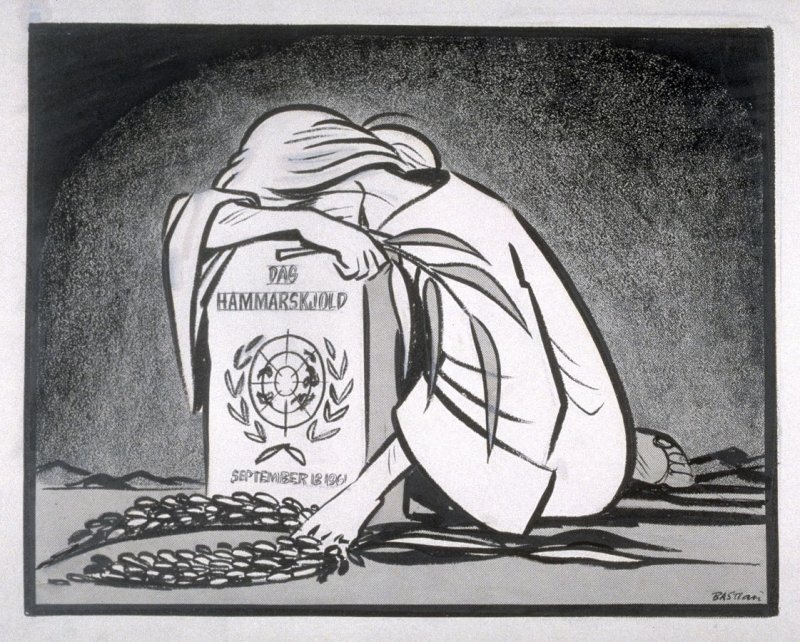
On 18 September 1961, Dag Hammarskjöld, second Secretary-General of the United Nations, died when the airplane he was in crashed in what was then Northern Rhodesia (now Zambia). He was traveling to negotiate a cease-fire in a conflict in the Republic of the Congo.

There Will Come Soft Rains

Ray Bradbury’s short story “There Will Come Soft Rains — August 4, 2026” from The Martian Chronicles reflects the day before the 80th anniversary of the bombing of Hiroshima in 1945. This version from BBC Radiophonic Workshop, 1977, titled “August 2026: There Will Come Soft Rains”, was adapted for “Narrator, Vocoder and Synthesizer” by Malcolm Clarke.

Someone’s comment on the YouTube page for a different version provides some context:

This Ray Bradbury story is an anti-war message, as is the Sara Teasdale poem with the same title. However, the full title of the story in The Martian Chronicles is “There Will Come Soft Rains — August 4, 2026”. On August 5, 1945 (US time), the USA dropped a nuclear bomb on Hiroshima. August 4, 2026 marks the end of a full 80 years after the bombing. The destroyed house repeating “Today is August 5, 2026” endlessly is a warning of what happened when we forgot Hiroshima 81 years before. Bradbury wrote the story in 1950, just after the Soviet Union first successfully tested a nuclear bomb in 1949. The story was right for its time as it is today. It is about what a Cold War brings when it gets hot.

Sara Teasdale wrote her poem around 1918 during a time of total war and pandemic. Perhaps the poem still has something to say to us in our current condition.

(War Time)

There will come soft rains and the smell of the ground,
And swallows calling with their shimmering sound;

And frogs in the pools singing at night,
And wild plum-trees in tremulous white;

Robins will wear their feathery fire
Whistling their whims on a low fence-wire;

And not one will know of the war, not one
Will care at last when it is done.

Not one would mind, neither bird nor tree
If mankind perished utterly;

And Spring herself, when she woke at dawn,
Would scarcely know that we were gone.

—- Sara Teasdale, There Will Come Soft Rains

Prayer

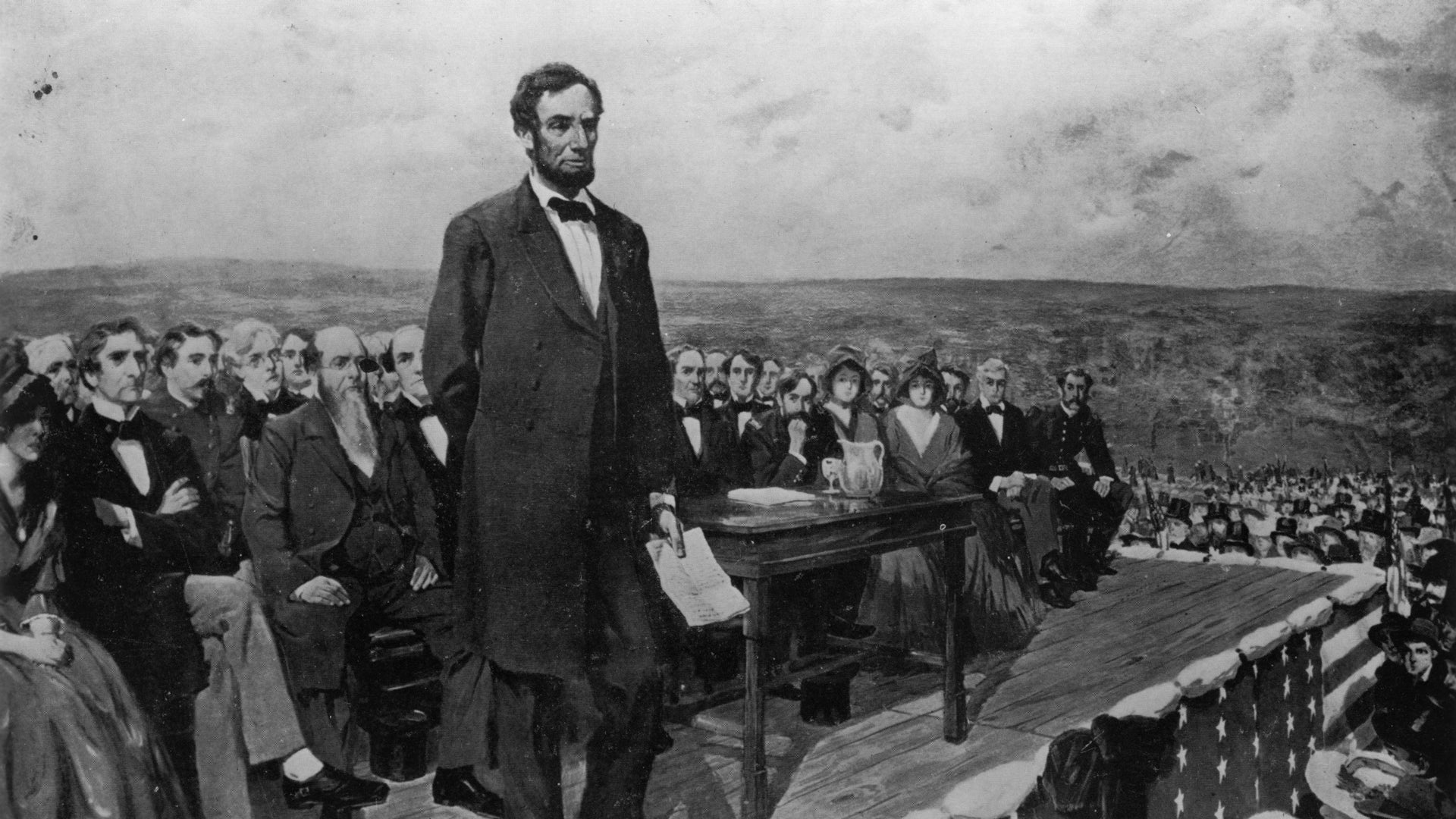
The most intelligent and decent prayers ever uttered by a famous American, addressed To Whom It May Concern, and following an enormous man-made calamity, were those of Abraham Lincoln at Gettysburg, Pennsylvania, back when battlefields were small. They could be seen in their entirety by men on horseback atop a hill. Cause and effect were simple. Cause was gunpowder, a mixture of potassium nitrate, charcoal, and sulfur. Effect was flying metal. Or a bayonet. Or a rifle butt.

Abraham Lincoln said this about the silenced killing grounds at Gettysburg:

“We cannot dedicate — we cannot consecrate — we cannot hallow this ground. The brave men, living and dead, who struggled here have consecrated it far above our poor power to add or detract.”

Poetry! It was still possible to make horror and grief in wartime seem almost beautiful. Americans could still have illusions of honor and dignity when they thought of war. The illusion of human you-know-what. That is what I call it: “The you-know-what.”

— Kurt Vonnegut, A Man Without a Country (2005)

The Battle of Gettysburg took place July 1-3, 1865, in and around the town of Gettysburg, Pennsylvania. Gettysburg is considered to have been the deadliest battle of the US Civil War.

The battlefield became the Soldiers’ National Cemetery. Abraham Lincoln delivered his famous “Gettysburg Address“, which Vonnegut cites above, at the cemetery’s dedication on November 19, 1865.

Sunday, December 30, 2018: When the World Outlawed War

Swords to Plowshares

And he shall judge among many people, and rebuke strong nations afar off; and they shall beat their swords into plowshares, and their spears into pruninghooks: nation shall not lift up a sword against nation, neither shall they learn war any more.

— Micah 4:3

For generations the peoples of the world have called for an end to war, and yet war continues unabated, dragging destruction and suffering in its train. This Sunday Robert Helfer will reflect on the war-related anniversaries of the year just ending and approach the questions: What can be done? What are we doing?

We would love to have you come worship with us.

Our services are Sundays at 11 a.m. at the Progressive Women’s Association Event Center, 305 Washington Ave. in downtown Clarksburg, behind the Courthouse. There are classes for children and adults 10 to 10:45 am, and a coffee gathering before the service. More about us.

Classes and worship are replaced by Spiritual Outings on the first Sunday of each month during the summer, with brief worship, a potluck picnic, and outdoor activities. The schedule is in the sidebar.

Children are welcome. There is childcare and an activity for young children during the service.

The building is wheelchair accessible, with an accessible restroom.

Map

The schedule for the current adult religious education class is here.

Email westforkuu@gmail.com or use our contact form for more information

or write to us at PO Box 523, Clarksburg WV 26302