Saturday, January 6, 2024: Epiphany

Today marks the end of the Christmas Season according to Western European tradition. Known as the Feast of the “Epiphany”, or “Theophany”, or “Three Kings Day”, it marks the first manifestation of Jesus Christ to the Gentiles through the arrival of the Magi — the “Three Kings” or “the Wise Men” who journeyed from “the East” — in Bethlehem to worship the newborn Christ; for some Christians it is the proper time for giving gifts. In the traditional Western ecclesiastical calendar it marks the end of the sacred time of the Twelve Days of Christmas and the beginning of the Ordinary Time that extends until the beginning of the sacred time of Lent.

Clamavi de Profundis, “We Three Kings”

For those interested, Patrick Murfin has provided a nice summary of the traditions of Epiphany, the Star of Bethlehem, and the popular carol “We Three Kings”.

Sunday, 24 December 2023: Fourth Sunday in Advent: Love

It seems to me that one of the happiest lessons in the gospel is that of love. We are told to love one another and to show that love by giving. And that love becomes more like that of God when we see Jesus Himself in those around us, as the apostles did… He taught them about love, about loving. The prodigal son, the sick, the lepers, the privileged, the tax-gatherers, the sinners, those in prison — in other words, loving the unlovable. Love is the reason for it all

— Dorothy Day, an undated entry in her diary, The Duty of Delight: The Diaries of Dorothy Day, edited by Robert Ellsberg (2008)

Email westforkuu@gmail.com or use our contact form for more information or write to us at PO Box 523, Clarksburg WV 26302

Sunday, 17 December 2023: Third Sunday in Advent: Joy

One of the first conditions of happiness is that the link between man and nature shall not be severed, that is, that he shall be able to see the sky above him, and that he shall be able to enjoy the sunshine, the pure air, the fields with their verdure, their multitudinous life. Men have always regarded it as a great unhappiness to be deprived of all these things.

— Leo Tolstoy, My Religion, translated by Huntington Smith (1885)

Email westforkuu@gmail.com or use our contact form for more information or write to us at PO Box 523, Clarksburg WV 26302

Sunday, 10 December 2023: Second Sunday in Advent: Peace

If we want there to be peace in the world, we have to be brave enough to soften what is rigid in our hearts, to find the soft spot and stay with it. We have to have that kind of courage and take that kind of responsibility. That’s the true practice of peace.

— Pema Chödrön, Practicing Peace in Times of War

Email westforkuu@gmail.com or use our contact form for more information or write to us at PO Box 523, Clarksburg WV 26302

Sunday, 3 December 2023: First Sunday in Advent: Hope

Hope is not the same thing as optimism. It is not the conviction that something will turn out well, but the certainty that something makes sense, regardless of how it turns out.

— Václav Havel, Disturbing the Peace: A Conversation with Karel Hvížďala, translated by Paul Wilson (1990)

Email westforkuu@gmail.com or use our contact form for more information or write to us at PO Box 523, Clarksburg WV 26302

Death of Michael Servetus

On this date, 27 October 1553, Michael Servetus, physician and theologian, was burned at the stake in Geneva, Switzerland, for the crime of rejecting the doctrine of the Trinity. He was the first European to describe pulmonary circulation. The description, unnoticed by any of the heretic hunters who examined Servetus’ books, was hidden in the book that Calvin ordered to be burned along with Servetus himself.

A full description of Servetus’ trial and execution can be found in Lawrence and Nancy Goldstone, Out of the Flames: The Remarkable Story of a Fearless Scholar, a Fatal Heresy, and One of the Rarest Books in the World, or Roland H. Bainton, Hunted Heretic: The Life and Death of Michael Servetus, 1511-1553.

Read more here.

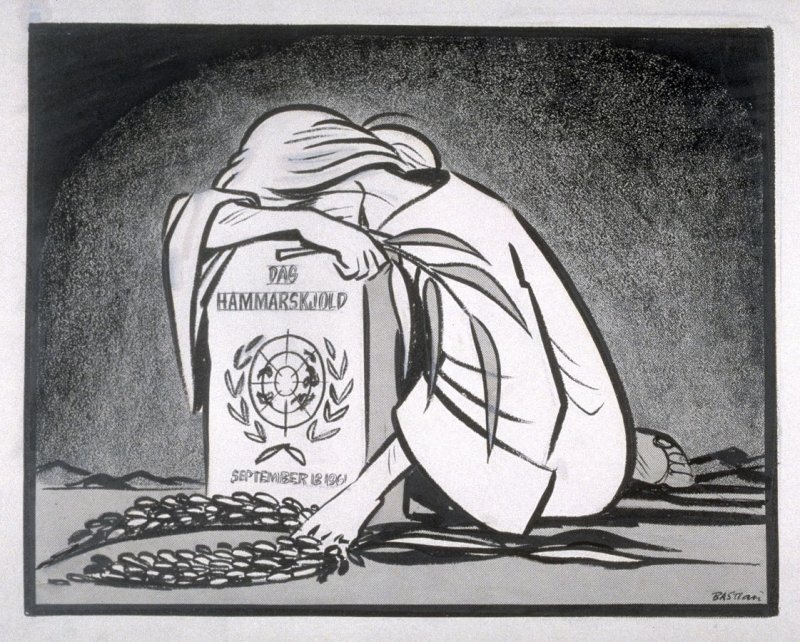
In Memory of Dag Hammarskjöld

You wake from dreams of doom and — for a moment — you know: beyond all the noise and the gestures, the only real thing, love’s calm unwavering flame in the half-light of an early dawn.

— Dag Hammarskjöld, Markings, translated by Leif Sjöberg & W.H. Auden

On 18 September 1961, Dag Hammarskjöld, second Secretary-General of the United Nations, died when the airplane he was in crashed in what was then Northern Rhodesia (now Zambia). He was traveling to negotiate a cease-fire in a conflict in the Republic of the Congo.

The Birthday of the Universe

Tonight is the first evening of Rosh Hashanah which begins at sundown.  For Jews it is Yom Teruah, the Day of Shouting (or Blasting) which marks the first of the High Holy Days as well as the start of the New Year.  It falls on the first day of Tishrei, the seventh month of the ecclesiastical year that began with Passover in the spring and represents the first of the civic year.  This year it ushers in 5784 on the Hebrew calendar.

May the joyful noise of the shofar announce the new year for all our Jewish friends.

https://patrickmurfin.blogspot.com/2023/09/rosh-hashanahsounding-shofar-for-new.html

There Will Come Soft Rains

Ray Bradbury’s short story “There Will Come Soft Rains — August 4, 2026” from The Martian Chronicles reflects the day before the 80th anniversary of the bombing of Hiroshima in 1945. This version from BBC Radiophonic Workshop, 1977, titled “August 2026: There Will Come Soft Rains”, was adapted for “Narrator, Vocoder and Synthesizer” by Malcolm Clarke.

Someone’s comment on the YouTube page for a different version provides some context:

This Ray Bradbury story is an anti-war message, as is the Sara Teasdale poem with the same title. However, the full title of the story in The Martian Chronicles is “There Will Come Soft Rains — August 4, 2026”. On August 5, 1945 (US time), the USA dropped a nuclear bomb on Hiroshima. August 4, 2026 marks the end of a full 80 years after the bombing. The destroyed house repeating “Today is August 5, 2026” endlessly is a warning of what happened when we forgot Hiroshima 81 years before. Bradbury wrote the story in 1950, just after the Soviet Union first successfully tested a nuclear bomb in 1949. The story was right for its time as it is today. It is about what a Cold War brings when it gets hot.

Sara Teasdale wrote her poem around 1918 during a time of total war and pandemic. Perhaps the poem still has something to say to us in our current condition.

(War Time)

There will come soft rains and the smell of the ground,
And swallows calling with their shimmering sound;

And frogs in the pools singing at night,
And wild plum-trees in tremulous white;

Robins will wear their feathery fire
Whistling their whims on a low fence-wire;

And not one will know of the war, not one
Will care at last when it is done.

Not one would mind, neither bird nor tree
If mankind perished utterly;

And Spring herself, when she woke at dawn,
Would scarcely know that we were gone.

—- Sara Teasdale, There Will Come Soft Rains